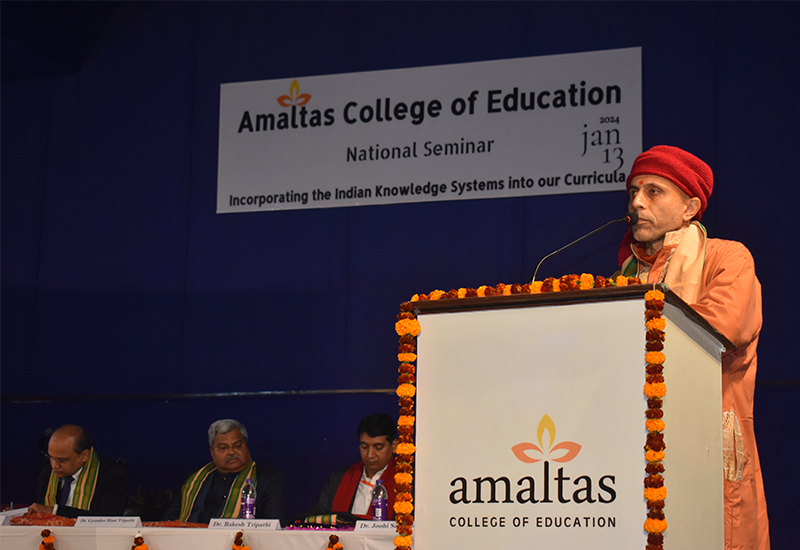


Introduction to Indian Knowledge Systems
Overview
Key Focus Areas
The IKS course covers a wide spectrum of knowledge traditions, highlighting their relevance for today’s educators and learners:
Foundations of IKS
Objectives, vocabulary, key elements, design principles, and addressing common misconceptions.
Heritage and Governance
From Arthashastra’s strategic thinking to legal and ethical issues in protecting traditional knowledge.
Scientific and Technological Contributions
Ancient advancements in mathematics, chemistry, water management, agriculture, calendrical systems, and botanical studies.
Health and Well-being
Ayurveda, yoga beyond asanas, and holistic living practices.
Art, Architecture, and Literature
Temple architecture, traditional crafts, and pedagogical insights from Panchatantra and Nītiśāstra.
Philosophy and Ethics
Moral teachings, governance wisdom, and the relevance of classics like the Bhagavad Gita in contemporary education.
Why It Matters
Relevance of Tradition
Appreciate India’s knowledge traditions as living, evolving systems that address today’s challenges.
Practical Application
Apply indigenous strategies in curriculum design, classroom management, and sustainability education.
Global Connections
Link ancient wisdom to modern frameworks such as the Sustainable Development Goals (SDGs).
Fostering Inclusion
Promote cross-cultural understanding, self-awareness, and respect for diversity among students.